

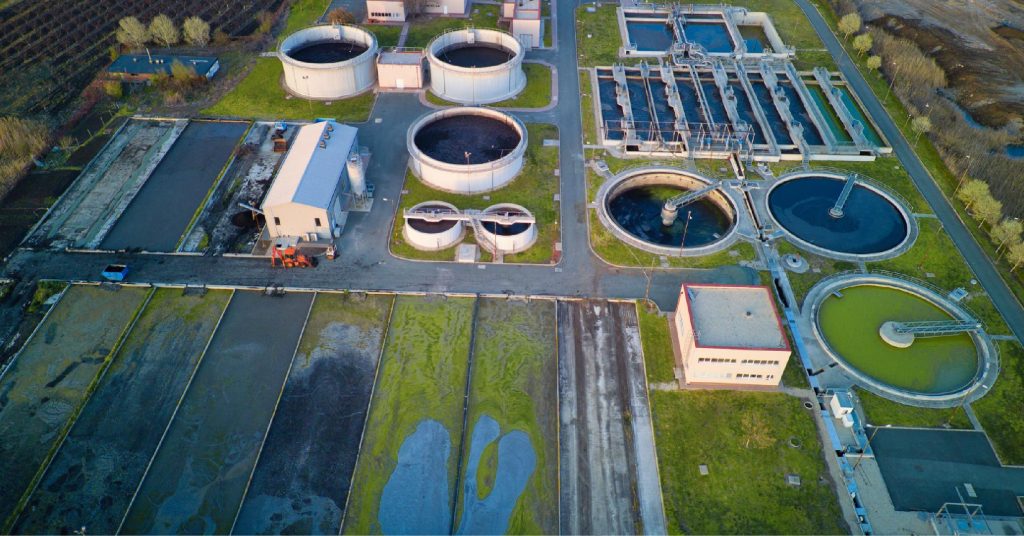
Malaysia’s industrial sector — including palm oil, food & beverage, chemical, paper, rubber, and pharmaceutical industries — is expanding rapidly. With this growth comes increasing pressure to manage wastewater responsibly while meeting strict Department of Environment (DOE) discharge standards.
High-strength industrial wastewater containing COD, BOD, oil & greeffluent treatmentase, and organic load requires advanced effluent treatment solutions that do more than simply clean water. Modern industries now aim to convert waste into value — reducing energy costs, improving sustainability, and supporting circular-economy goals.
This is where ECSB (Expanded Granular Sludge Bed) anaerobic technology becomes a breakthrough, combining high-rate treatment with biogas recovery. ECSB not only achieves superior pollutant removal but also generates renewable energy, making it a powerful option for industries in Malaysia.
Why ECSB Anaerobic Technology Is Ideal for Malaysia?
Industrial wastewater across Malaysia often contains high organic loads due to the country’s strong agro-based and food-processing industries. Traditional aerobic systems require large areas, high energy, and intensive maintenance.
ECSB anaerobic reactors address these limitations by offering:
- High COD/BOD removal efficiencies
- Very low energy consumption
- High-rate biological degradation
- Significant biogas generation
- Lower sludge production
- Compact footprint
These advantages make ECSB suitable for modern industrial effluent treatment system designs where efficiency and sustainability are non-negotiable.
How does an ECSB Reactor Work?
An ECSB anaerobic reactor breaks down organic pollutants in the absence of oxygen, converting them into methane-rich biogas and treated effluent.
Key functions inside the reactor include:
- Granular Sludge Formation
High-density anaerobic granules degrade complex organics rapidly. - Upflow Hydraulics
Wastewater flows upward through sludge granules, ensuring maximum contact and fast treatment. - In-built Three-Phase Separator
Efficient solids–liquid–gas separation ensures stable operation with minimal sludge washout. - Biogas Collection
Methane-rich gas is routed for power generation or steam production.
This process makes ECSB one of the most efficient technologies used in the industrial effluent treatment systems Malaysia designs today.
Performance Benefits for Industrial Plants
ECSB systems deliver several high-impact benefits:
1. High Strength Wastewater Handling
Ideal for COD levels between 2,000–60,000 mg/L, common in Malaysian industries.
2. Biogas Generation and Energy Recovery
Up to 80–90% of organic load is converted into biogas, reducing energy bills.
3. Small Footprint, Large Capacity
ECSB reactors require far less land than traditional lagoons or aerobic plants.
4. Reduced Sludge Disposal Costs
Less sludge = lower truckloads, storage, and handling requirements.
5. Stable Performance
Handles shock loads and fluctuating wastewater more effectively.
For industries pursuing sustainability frameworks such as ESG compliance or DOE reduction targets, ECSB-based effluent treatment plant solutions provide clear long-term advantages.
Integration with Full Water & Effluent Treatment Systems
ECSB reactors are typically integrated with a complete water effluent treatment system, Malaysia setup, including:
• Pre-Treatment
Screening, neutralisation, oil–water separation.
• ECSB Anaerobic Reactor
Primary high-load reduction and biogas generation.
• Post-Treatment (Aerobic Polishing)
MBBR, activated sludge, or MBR to meet DOE discharge norms.
• Tertiary Treatment
UF, RO, filtration, or disinfection for recycling and reuse.
This integrated approach enables facilities to move toward nearly closed-loop water effluent treatment, reducing freshwater intake and improving sustainability.
Applications Across Malaysian Industries
ECSB systems are widely applied in:
- Palm oil mills
- Food & beverage processing
- Rubber and latex industries
- Paper mills
- Chemical manufacturing
- Beverage and brewery plants
- Pharmaceutical facilities
- Integrated industrial estates
All of these sectors benefit from high-rate anaerobic treatment and renewable biogas production.
Ion Exchange’s Expertise in ECSB-Based Effluent Treatment
Effluent Treatment with Resource Recovery
Effluent Treatment with Resource Recovery was implemented for one of the largest Business Conglomerates in the ASEAN region with diverse business interests. As a group committed to the highest standards of sustainability & environmental consciousness, they chose Ion Exchange (India) Ltd. to build an advanced wastewater treatment facility for complex paper effluent treatment with resource recovery for their paper mill in January 2019.
Impressed with the unique features of the External Circulation Sludge Bed (ECSB) anaerobic technology and our efficient execution of the first project with them, they placed a repeat order in October 2019 for a similar effluent treatment plant for their newly acquired paper mill.
Conclusion
As Malaysia continues to strengthen its environmental regulations and sustainability goals, industries need smarter, more efficient wastewater solutions. ECSB anaerobic technology transforms traditional effluent treatment by delivering high COD reduction, energy recovery, low operational cost, and long-term compliance.
For industries aiming to reduce environmental impact and convert waste into value, ECSB is one of the most powerful technologies available today.
Connect with Ion Exchange experts to design a high-performance water effluent treatment solution with ECSB reactors tailored to your Malaysian operations.