

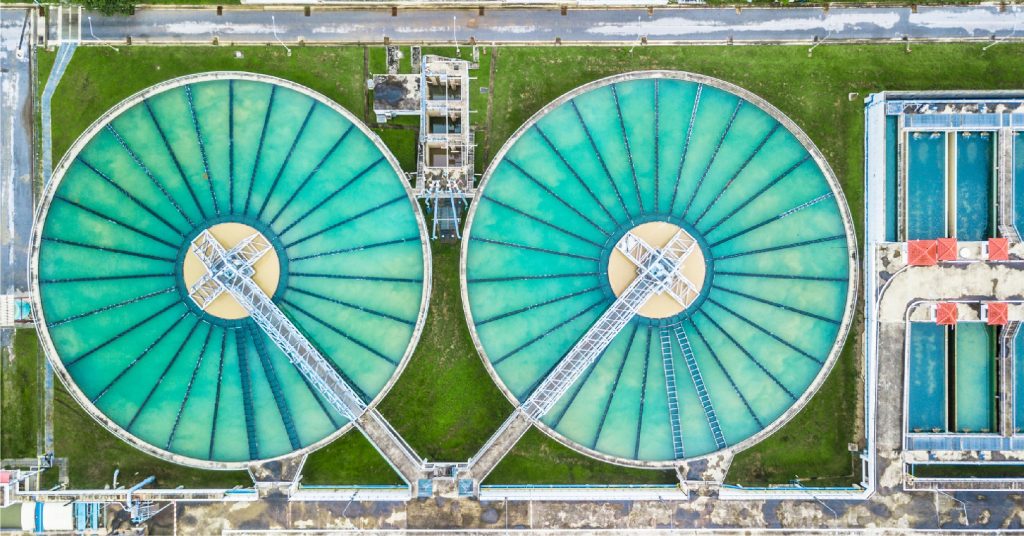
Malaysia’s growing industrial base, expanding urban centers, and increasing focus on water reuse are driving the need for efficient and space-optimized treatment technologies. Conventional wastewater systems often struggle with fluctuating loads, limited footprints, and rising operational costs. In response, advanced biological systems such as the Fluidised Media Reactor (FMR) are gaining strong adoption across municipal and industrial water treatment applications.
Designed for high-rate biological treatment, FMR technology is redefining how wastewater is treated in Malaysia—delivering higher efficiency, better stability, and lower lifecycle costs.
Understanding the Fluidised Media Reactor
A Fluidised Media Reactor is an advanced biological treatment system that uses specially designed media particles kept in constant motion (fluidised state) within the reactor. These media provide a large surface area for biofilm growth, enabling microorganisms to degrade organic pollutants efficiently.
Unlike conventional activated sludge systems that rely on suspended biomass, FMR systems retain biomass on media, allowing much higher biological activity in a smaller volume.
In essence, it is a high-performance wastewater treatment reactor engineered for compactness, resilience, and superior treatment efficiency.
Why Malaysia Needs Advanced Wastewater Treatment Reactors?
Malaysia faces several wastewater management challenges:
- Limited space for treatment infrastructure in industrial zones and urban developments
- Variable influent loads from manufacturing, food processing, and chemical industries
- Increasing regulatory scrutiny on discharge quality
- Growing emphasis on treated water reuse
Traditional systems often require large basins and struggle under fluctuating loads. A fluidised bed reactor for wastewater offers a reliable alternative by maintaining high treatment efficiency even under shock loading and space constraints.
How a Fluidised Media Reactor System Works?
A fluidised media reactor system operates through a combination of biological activity and controlled hydrodynamics:
1. Media Fluidisation
Specially engineered media particles are kept in suspension by upward water flow or aeration. This movement ensures continuous contact between wastewater, microorganisms, and oxygen.
2. Biofilm-Based Treatment
Microorganisms grow as a biofilm on the surface of the media. These microbes actively break down organic matter, ammonia, and other contaminants present in wastewater.
3. High Biomass Retention
Because the biomass is attached to the media, the system maintains a very high microbial concentration. This leads to faster reaction rates and improved treatment stability.
4. Efficient Solid Separation
Downstream clarification or membrane separation removes treated water from residual solids, producing a consistent and compliant effluent.
This design enables FMR systems to outperform conventional biological reactors in both efficiency and footprint.
Key Advantages of Fluidised Media Reactor Technology
The growing adoption of FMRs in Malaysia is driven by several clear benefits:
- Compact Design – Requires significantly less space than traditional treatment systems
- High Organic Load Handling – Ideal for industrial effluents with variable strength
- Process Stability – Resistant to shock loads and flow fluctuations
- Lower Sludge Production – Reduced sludge handling and disposal costs
- Energy Efficiency – Optimized aeration and shorter retention times
- Scalability – Easy to expand as treatment capacity increases
These advantages make FMRs especially suitable for industrial parks, manufacturing facilities, and municipal upgrades across Malaysia.
Applications of Fluidised Media Reactors in Malaysia
A fluidised bed reactor for wastewater is widely used across sectors such as:
- Food and beverage processing
- Chemicals and petrochemicals
- Textiles and electronics manufacturing
- Municipal sewage treatment plants
- Water reuse and zero liquid discharge (ZLD) systems
In each case, the fluidised media reactor system enables reliable compliance with discharge norms while supporting sustainable water management goals.
Ion Exchange’s Expertise in Fluidised Media Reactor Systems
Ion Exchange has decades of experience delivering advanced biological treatment solutions tailored to diverse industrial and municipal requirements. Our Fluidised Media Reactor solutions are designed to meet Malaysia’s regulatory standards while ensuring long-term operational efficiency.
The INDION Fluidised Media Reactor (FMR) uses the attached growth process for wastewater/sewage treatment and recycling. It incorporates a single tank unit, consisting of a bar screen chamber, specially designed floating media to facilitate the attached growth process, oxygen transfer through diffused membrane aeration, a lamella settler, anda chlorine contact tank. The system is available in mild steel and reinforced concrete.
The FMR works on the same principle as the submerged fixed film process, with only one exception – the media is not fixed and floats around in the aeration tank. The main advantage of this system over the submerged fixed film process is that it prevents choking of the media. This also avoids sludge recirculation. Compared to conventional technologies, the FMR is compact, energy efficient,t and user-friendly. It also allows flexibility in the design of the reactor tank.
The advantages of the INDION FMR are many:
- Unique single tank design, no moving parts, and easy maintenance.
- Attached growth process, with specially designed moving media.
- Compact and modular design.
- Minimal pumping and chemical cost, low operating cost.
- Flow rate for sewage treatment exceeding100 m3/d.
Applications of FMR include decentralised compact sewage plants for housing complexes, hotels, commercial complexes, industries, and rural communities. It can also be used in industrial waste treatment in industries such as food & beverage, textile, pulp and paper, chemicals, pharmaceuticals, petrochemicals, and dairy production.
Supporting Sustainable Water Management in Malaysia
As Malaysia continues to strengthen its environmental regulations and water reuse initiatives, advanced reactors like FMRs play a critical role. They enable industries and municipalities to treat wastewater efficiently, reduce freshwater dependency, and minimize environmental impact—all while controlling operating costs.
Conclusion
The Fluidised Media Reactor is transforming wastewater treatment in Malaysia by offering a compact, robust, and high-efficiency alternative to conventional systems. As a next-generation wastewater treatment reactor, it addresses space limitations, load variability, and sustainability requirements with confidence.
With Ion Exchange’s proven expertise in fluidised media reactor systems, industries and municipalities can adopt future-ready treatment solutions that deliver compliance, efficiency, and long-term water security.
Connect with Ion Exchange experts today to explore how Fluidised Media Reactor technology can optimize your water and wastewater treatment operations in Malaysia.
FAQs
1. What is a fluidised media reactor in wastewater treatment?
A fluidised media reactor is an advanced biological treatment system that uses moving media to support biofilm growth, enabling high-rate removal of organic pollutants in a compact reactor.
2. How does a fluidised media reactor system work?
The system keeps specially designed media in a fluidised state, allowing microorganisms attached to the media to efficiently degrade organic matter under continuous aeration and flow.
3. Why are FMR systems suitable for space-limited facilities?
FMR systems achieve high treatment efficiency in a much smaller footprint than conventional reactors by retaining high biomass concentrations on moving media.
4. Which industries commonly use fluidised bed reactors for wastewater?
Fluidised bed reactors are widely used in food & beverage, chemicals, textiles, petrochemicals, pharmaceuticals, electronics manufacturing, and municipal sewage treatment.
5.How do fluidised media reactors support water reuse and sustainability?
By delivering stable, high-quality treated effluent with lower energy and sludge generation, FMR systems enable reliable water reuse while reducing freshwater demand and environmental impact.