

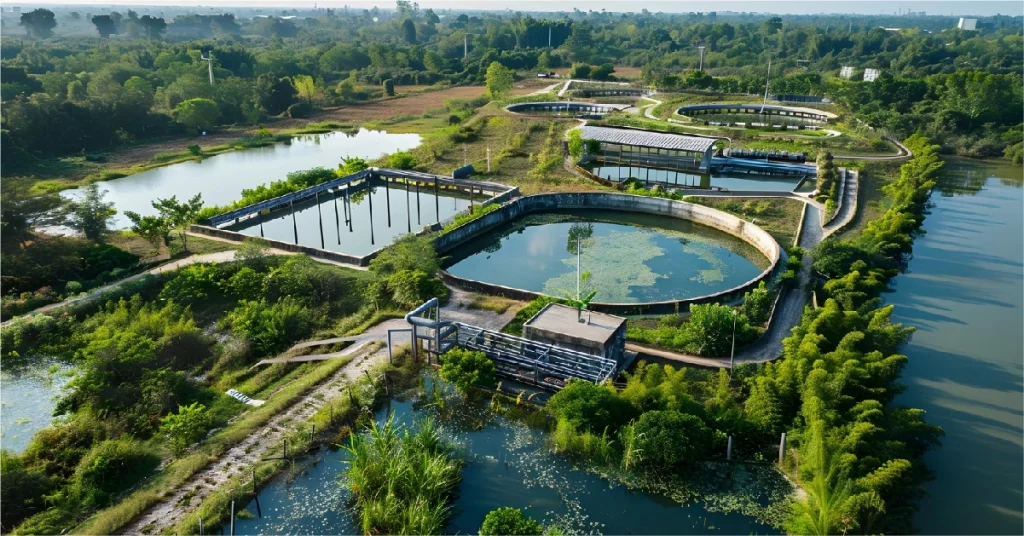
Reliable water supply depends not only on treating fresh water but also on managing wastewater effectively. As industrial and urban activity increases, Wastewater Treatment Plants in Malaysia play an important role in reducing pollution, protecting water resources, and creating opportunities for water reuse.
Modern wastewater treatment systems remove contaminants through physical, biological, chemical, and advanced treatment processes. For industries, these systems also help meet discharge requirements while reducing dependence on freshwater.
Why Wastewater Treatment Is Important in Malaysia?
Industrial and municipal wastewater can contain organic matter, suspended solids, chemicals, oils, nutrients, and other contaminants.
If inadequately treated wastewater is discharged into water bodies, it can affect:
- Water quality
- Aquatic ecosystems
- Public health
- Industrial water availability
- Long-term water security
Malaysia’s Department of Environment regulates industrial effluent discharge under the Environmental Quality Act and related regulations. Industrial facilities therefore need treatment systems capable of consistently achieving the required effluent quality.
How Wastewater Treatment Plants in Malaysia Work?
A modern water treatment plant in Malaysia may use several treatment stages depending on the source and quality of wastewater.
-
Preliminary Treatment
Screening and grit removal help separate larger solids, debris, and other materials before the wastewater enters subsequent treatment stages.
-
Primary Treatment
Sedimentation separates settleable solids from the wastewater and reduces part of the suspended pollutant load.
-
Secondary Biological Treatment
Biological treatment uses microorganisms to break down biodegradable organic matter.
Common technologies include:
- Activated sludge
- MBBR
- SBR
- MBR
-
Tertiary Treatment
Additional treatment may be required where higher-quality water is needed for discharge or reuse.
Depending on the application, tertiary treatment can include:
- Filtration
- Disinfection
- Ultrafiltration
- Reverse osmosis
- Other advanced membrane processes
The treatment configuration is selected according to wastewater characteristics and the required treated-water quality.
Industrial Wastewater Treatment in Malaysia
Industrial wastewater varies significantly between sectors, which means a standard treatment system may not be suitable for every facility.
-
Palm Oil and Food Processing
These industries can generate wastewater with high organic loads, suspended solids, and oils and grease. Biological treatment can play an important role in reducing biodegradable pollutants.
-
Electronics and Semiconductor Manufacturing
Industrial effluent may contain chemicals, metals, and other contaminants requiring specialised treatment and careful process control.
-
Textile and Dyeing
Textile wastewater can contain colour, chemicals, suspended solids, and high organic loads. Chemical and biological treatment may need to be combined with advanced polishing.
-
Pharmaceutical Manufacturing
Pharmaceutical wastewater can contain complex organic and chemical contaminants, requiring treatment systems designed around the specific process streams.
-
Chemical and Petrochemical Industries
These facilities can generate wastewater containing complex organic compounds, chemicals, oils, and other contaminants that require specialised treatment.
Technologies Used in Malaysian Wastewater Treatment Plants
The right wastewater treatment solutions in Malaysia depend on wastewater characteristics, capacity, discharge requirements, and water reuse objectives.
-
MBBR Technology
Moving Bed Biofilm Reactor technology uses biofilm carriers to support biological treatment. It can be considered where additional biological treatment capacity is required within existing infrastructure.
-
SBR Technology
Sequencing Batch Reactor systems perform biological treatment and settling in a batch-based process, offering flexibility for different wastewater treatment requirements.
-
MBR Technology
Membrane Bioreactor systems combine biological treatment with membrane filtration to produce high-quality treated water. Ion Exchange’s Malaysia performance report shows that its MBR technology content is already ranking on the first page, making this an established area of relevance for the market.
-
Reverse Osmosis
RO can provide advanced treatment for dissolved salts and other contaminants where higher-quality water is required for reuse.
-
Zero Liquid Discharge
ZLD systems can combine RO with evaporation and crystallisation technologies to maximise water recovery where zero liquid discharge is required.
How Wastewater Treatment Supports Safe Water Supply?
Effective wastewater treatment supports water security in several ways.
-
Reduces Water Pollution
Treatment removes contaminants before wastewater is discharged, helping protect rivers and other water resources.
-
Supports Water Reuse
Treated wastewater can be further processed for suitable non-potable applications such as:
- Cooling water
- Irrigation
- Toilet flushing
- Process water
The required treatment level depends on the intended reuse application.
-
Reduces Freshwater Dependency
Recycling treated wastewater allows industries and facilities to use recovered water instead of relying entirely on fresh water sources.
-
Supports Regulatory Compliance
Consistent treatment helps industries manage applicable effluent discharge requirements and maintain environmental compliance.
How to Choose a Wastewater Treatment Plant in Malaysia?
Selecting the right Wastewater Treatment Plant requires an assessment of the complete treatment requirement.
-
Analyse the Wastewater
Important parameters include:
- Flow rate
- BOD
- COD
- TSS
- pH
- TDS
- Oil and grease
- Specific contaminants
-
Define the Required Water Quality
The treatment system should be designed according to whether the treated water will be:
- Discharged
- Used for irrigation
- Used for utilities
- Recycled for industrial processes
-
Consider Available Space
Where plant expansion is constrained, compact technologies such as MBBR or MBR may be considered depending on the application.
-
Evaluate Long-Term Operating Requirements
Chemical consumption, energy requirements, maintenance, sludge management, membrane replacement, and monitoring requirements should be considered before selecting the system.
Ion Exchange Wastewater Treatment Solutions in Malaysia
Ion Exchange provides integrated wastewater treatment solutions covering industrial and municipal applications.
Its capabilities include:
- Sewage treatment systems
- Industrial wastewater treatment
- MBR, MBBR, and SBR technologies
- Membrane treatment
- RO systems
- Water recycling and reuse
- Zero Liquid Discharge solutions
Ion Exchange’s broader wastewater treatment portfolio combines biological, membrane, and advanced treatment technologies to develop systems according to individual wastewater characteristics and reuse requirements.
The company’s Malaysia-focused portfolio also includes wastewater treatment solutions alongside established treatment technologies such as MBR, industrial wastewater treatment, and sewage treatment.
This integrated approach helps industries manage wastewater treatment, water recovery, and resource efficiency as part of a broader water-management strategy.
The Future of Wastewater Treatment in Malaysia
Wastewater treatment is increasingly moving towards greater water recovery, advanced treatment, and smarter plant management.
Technologies such as MBR, RO, advanced oxidation, MBBR, and digital monitoring can help treatment plants respond to changing wastewater characteristics and increasingly demanding water-quality requirements.
For industries, the focus is also shifting from simply treating wastewater before discharge to recovering water for suitable reuse.
This makes modern wastewater treatment an important part of long-term water security and sustainable industrial operations in Malaysia.
Conclusion
Wastewater Treatment Plants in Malaysia play an important role in protecting water resources, maintaining environmental compliance, and supporting safe and sustainable water use.
By combining appropriate biological, chemical, membrane, and advanced treatment technologies, wastewater can be treated to the quality required for discharge or suitable reuse.
Connect with Ion Exchange experts for customised wastewater treatment, sewage treatment, water recycling, and advanced water management solutions for your facility in Malaysia.
FAQs
-
What is the purpose of a wastewater treatment plant?
A wastewater treatment plant removes contaminants from domestic or industrial wastewater so that the treated water can be safely discharged or reused.
-
What technologies are used in wastewater treatment plants in Malaysia?
Depending on the application, systems may use activated sludge, MBBR, SBR, MBR, filtration, RO, disinfection, and ZLD technologies.
-
Can treated wastewater be reused in Malaysia?
Yes. Depending on the treatment quality, treated wastewater can be reused for applications such as cooling, irrigation, flushing, utilities, and selected industrial processes.
-
Why is industrial wastewater treatment important?
Industrial wastewater treatment helps remove pollutants, protect water resources, support regulatory compliance, and reduce freshwater consumption through recycling and reuse.
-
How do I choose the right wastewater treatment plant?
The selection should consider wastewater characteristics, flow rate, required treated-water quality, available space, discharge requirements, reuse objectives, and long-term operating costs.