

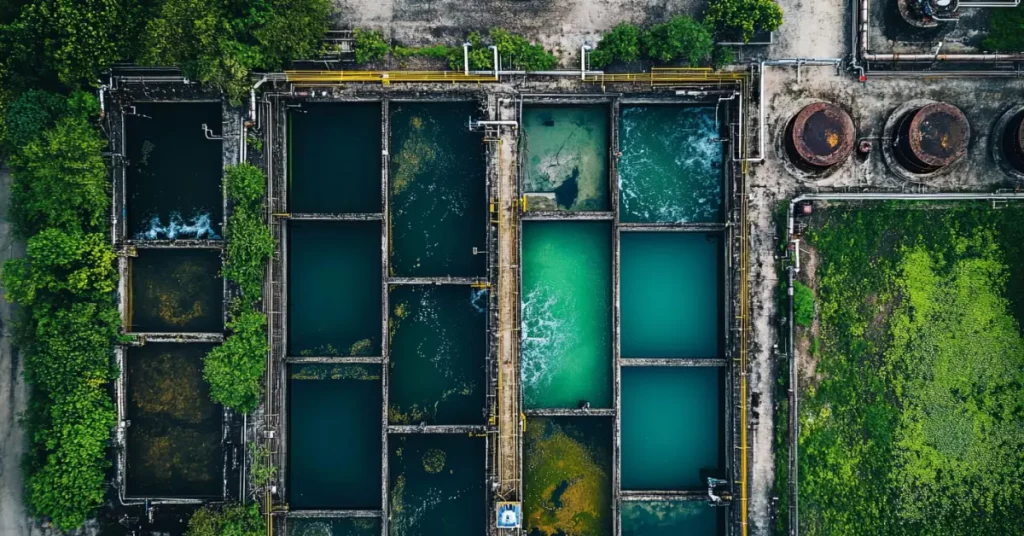
Industries across Malaysia rely on consistent water quality for manufacturing processes, utilities, cleaning, cooling, and production operations.
However, industrial wastewater often contains complex contaminants such as suspended solids, oils, metals, organic pollutants, colour, and chemicals that require specialised treatment before discharge or reuse.
This is where chemical wastewater treatment plays an important role.
By using carefully selected water treatment chemicals, industries can improve contaminant removal, enhance treatment efficiency, protect downstream systems, and achieve compliance with environmental discharge requirements.
For sectors such as manufacturing, palm oil, food processing, chemicals, pharmaceuticals, electronics, and power generation, effective industrial wastewater treatment is essential for reducing environmental impact and improving operational reliability.
What Is Chemical Treatment of Wastewater?
Chemical treatment is a wastewater treatment process that uses specific chemicals to remove or reduce contaminants present in industrial wastewater.
Unlike biological treatment, which relies on microorganisms to break down organic pollutants, chemical treatment uses controlled reactions to separate, neutralise, precipitate, or transform contaminants.
Common objectives of chemical wastewater treatment include:
- Removal of suspended solids
- Reduction of colour and turbidity
- Heavy metal removal
- pH correction
- Oil and grease separation
- Improved sludge settling
- Reduction of organic load
- Enhanced performance of downstream treatment systems
Chemical treatment is often integrated with physical and biological processes to create a complete industrial water treatment solution.
Why Is Industrial Wastewater Treatment Important in Malaysia?
Malaysia has a diverse industrial sector including palm oil processing, manufacturing, electronics, food and beverage, chemicals, and petrochemicals.
These industries generate wastewater with different characteristics depending on raw materials, production processes, and operating conditions.
Untreated or poorly treated wastewater can lead to:
- Environmental pollution
- Regulatory non-compliance
- Higher disposal costs
- Production disruptions
- Increased freshwater consumption
Effective effluent treatment helps industries recover water, reduce discharge impact, and maintain sustainable operations.
How Does Chemical Wastewater Treatment Improve Water Quality?
1. Removes Suspended Solids and Turbidity
Industrial wastewater often contains fine particles that cannot settle naturally.
Coagulants and flocculants are commonly used to combine these small particles into larger flocs that can be easily separated through clarification or filtration.
This improves:
- Water clarity
- Filtration efficiency
- Downstream equipment protection
- Overall treatment performance
Proper chemical dosing ensures better solids removal while reducing unnecessary chemical consumption.
2. Supports Heavy Metal Removal
Industries such as metal finishing, electronics, mining, and chemical processing may generate wastewater containing heavy metals.
Chemical treatment helps convert dissolved metals into insoluble compounds that can be separated from water.
Commonly removed contaminants include:
- Chromium
- Copper
- Nickel
- Zinc
- Iron
Effective metal removal protects the environment and helps industries meet discharge standards.
3. Improves Biological Treatment Performance
Chemical treatment is often used as a pretreatment step before biological wastewater treatment.
By removing toxic substances, balancing pH, and reducing excessive pollutant loads, chemicals create better conditions for microorganisms.
This improves the efficiency of biological processes used in:
- Effluent treatment plants
- Sewage treatment systems
- Industrial wastewater treatment plants
A well-balanced combination of chemical and biological treatment provides more stable plant operation.
4. Controls pH Levels
Many industrial processes generate wastewater with acidic or alkaline characteristics.
Extreme pH levels can damage treatment equipment and reduce biological treatment efficiency.
Chemical neutralisation helps maintain wastewater within the required pH range before further treatment.
Proper pH control improves:
- Chemical reaction efficiency
- Biological activity
- Equipment protection
- Discharge compliance
5. Reduces Colour and Organic Contaminants
Industries such as textiles, paper, dyes, and chemicals may generate wastewater with high colour and organic content.
Specialised chemicals help remove colour-causing compounds and improve the quality of treated water.
This supports:
- Better treated-water appearance
- Improved reuse potential
- Reduced environmental impact
6. Enhances Sludge Separation
Poor sludge settling can reduce the efficiency of an effluent treatment plant.
Flocculants improve particle aggregation, allowing sludge to settle faster and reducing suspended solids in treated water.
Better sludge separation helps reduce:
- Clarifier loading
- Filter blockage
- Sludge handling challenges
- Operational interruptions
Types of Water Treatment Chemicals Used in Industries
Different wastewater characteristics require different chemical solutions.
-
Coagulants
Coagulants neutralise particle charges and help suspended solids combine into larger particles.
They are commonly used for:
- Clarification
- Turbidity reduction
- Colour removal
-
Flocculants
Flocculants help small particles form larger flocs that can be separated through sedimentation or filtration.
They improve:
- Settling performance
- Sludge dewatering
- Water recovery
-
pH Adjustment Chemicals
Acids and alkalis are used to neutralise wastewater and maintain suitable operating conditions.
-
Oxidising Chemicals
Oxidising agents help break down specific organic compounds, colour, odour, and difficult-to-treat contaminants.
-
Specialty Treatment Chemicals
Advanced formulations may be used for:
- Boiler water treatment
- Cooling water treatment
- Membrane protection
- Scale control
- Corrosion prevention
The correct selection of water treatment chemicals depends on wastewater composition, treatment objectives, and regulatory requirements.
Chemical Treatment in Different Malaysian Industries
-
Palm Oil Industry
Palm oil wastewater contains high organic loads and suspended solids.
Chemical treatment helps improve solids separation and supports biological treatment processes.
-
Textile Industry
Textile wastewater may contain dyes, chemicals, and colour compounds.
Coagulation and oxidation-based treatment can improve colour removal and water quality.
-
Food and Beverage Industry
Food processing wastewater often contains fats, oils, grease, and organic matter.
Chemical treatment helps improve clarification and reduce treatment load.
-
Electronics Industry
Electronics manufacturing requires precise water quality control.
Chemical treatment supports contaminant removal and protects advanced water purification systems.
-
Chemical and Petrochemical Industry
Chemical industries generate complex wastewater containing organic and inorganic pollutants.
Integrated chemical and biological treatment helps achieve reliable effluent quality.
Benefits of Chemical Wastewater Treatment
A properly designed chemical treatment system provides:
- Improved industrial water quality
- Better contaminant removal
- Enhanced effluent treatment efficiency
- Reduced environmental impact
- Improved compliance
- Better downstream equipment protection
- Higher water reuse potential
- More stable plant operation
The effectiveness of chemical treatment depends on correct chemical selection, dosing control, wastewater analysis, and continuous monitoring.
Ion Exchange Industrial Water Treatment Chemicals
Ion Exchange provides a wide range of water treatment chemicals designed for industrial wastewater treatment, effluent treatment, cooling water treatment, boiler water treatment, and process water applications.
Its speciality chemical solutions include coagulants, flocculants, scale inhibitors, corrosion inhibitors, and process chemicals designed to improve treatment efficiency and reduce operating challenges.
Combined with wastewater treatment technologies, automation, and process expertise, Ion Exchange provides integrated solutions that help industries achieve improved water quality, reduced chemical consumption, and reliable treatment performance.
The company supports industries across sectors with complete chemical management solutions, from chemical selection and dosing optimisation to monitoring and lifecycle support.
Factors to Consider Before Selecting Wastewater Treatment Chemicals
The right chemical treatment approach depends on:
- Wastewater characteristics
- Contaminant type
- Required treated-water quality
- Existing treatment process
- Flow variation
- Operating conditions
- Chemical compatibility
- Sludge generation
- Regulatory requirements
Chemical dosing should always be based on wastewater testing and jar testing rather than fixed assumptions.
Incorrect chemical selection or overdosing can increase operating costs and create additional sludge-handling challenges.
Conclusion
Chemical treatment is an important part of modern industrial wastewater treatment systems.
By improving solids removal, controlling pH, reducing contaminants, enhancing biological treatment, and supporting water reuse, chemical wastewater treatment helps industries improve operational efficiency and maintain reliable water quality.
For industries in Malaysia, selecting the right treatment chemicals and integrating them with suitable effluent treatment technologies is essential for sustainable water management.
Connect with Ion Exchange experts for customised industrial water treatment solutions, advanced water treatment chemicals, and complete effluent treatment systems designed for efficient wastewater management.
FAQs
-
What is chemical wastewater treatment?
Chemical wastewater treatment uses specialised chemicals to remove contaminants, adjust pH, improve solids separation, and enhance overall wastewater treatment performance.
-
Why are water treatment chemicals used in industries?
Water treatment chemicals help remove pollutants, improve clarification, protect equipment, support water reuse, and maintain compliance with wastewater discharge standards.
-
What industries use chemical wastewater treatment?
Industries such as palm oil, textiles, food and beverage, electronics, chemicals, pharmaceuticals, and petrochemicals commonly use chemical wastewater treatment.
-
Can chemical treatment improve industrial water reuse?
Yes. By reducing contaminants and improving treated-water quality, chemical treatment can support water recovery and reuse applications.
-
How are the right wastewater treatment chemicals selected?
Chemical selection depends on wastewater characteristics, contaminants present, treatment objectives, existing systems, and required treated-water quality.